
Godwin Xerri, Chairman of independent ship agents’ network the Worldwide Ship Agencies Association (WWSA), has issued the following open letter to fellow maritime industry stakeholders.
The world’s shipping industry, the silent engine of global commerce, is under unprecedented strain. Wars raging across the Middle East, Eastern Europe, and Africa have spilled into the maritime domain, transforming merchant vessels into targets and seafarers into unwilling participants in geopolitical conflict. The consequences are reverberating far beyond the oceans, shaking oil markets, disrupting supply chains, and destabilizing national economies.
For the men and women who crew the world’s merchant fleet, the dangers are no longer limited to storms or mechanical failures. In the Strait of Hormuz, crews have been seized and held hostage as armed groups target tankers in retaliation for military strikes. Several vessels have been hit by missiles and drones, leaving seafarers dead or injured. Survivors describe the terror of sudden explosions at sea, the scramble to abandon ship, and the uncertainty of whether help will arrive.
“We are no longer just transporting goods—we are targets,” one captain told colleagues after his vessel narrowly escaped a drone strike. The psychological toll is immense. Many crews refuse assignments through the Gulf, citing not only the risk of attack but also the crushing cost of war-risk insurance, which has soared by more than fifty percent. For some, the profession that once promised adventure and livelihood has become a gamble with life itself.
Chokepoints under siege
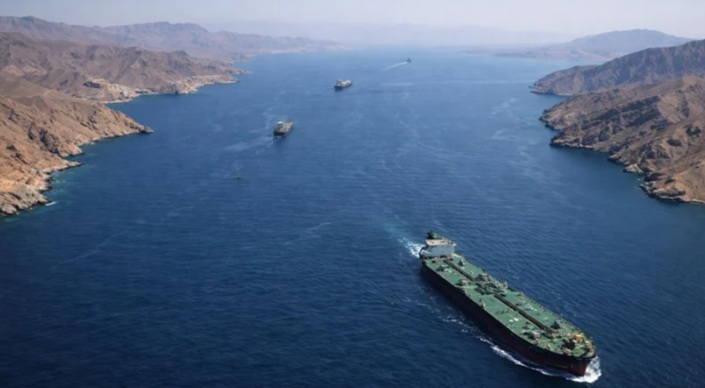
The strategic waterways that underpin global trade have become flashpoints. The Strait of Hormuz, through which nearly a fifth of the world’s oil supply flows, has seen traffic collapse by almost ninety percent. Gulf exporters have been forced to reroute shipments through pipelines, but capacity is limited and costs are high. In the Black Sea, drone strikes have disrupted grain and oil flows, threatening food supplies in vulnerable regions. Meanwhile, Somali pirates and Houthis have joined the fray to add even more turmoil in this chaotic situation.
Each incident underscores the fragility of maritime commerce. Shipping lanes that once symbolised stability are now contested spaces, where the line between civilian trade and military conflict has blurred.
Economic shockwaves
The economic fallout has been swift. Oil prices surged past $107 per barrel earlier this year, driven by the collapse of tanker traffic through Hormuz and uncertainty over future supply. Insurance premiums have skyrocketed, making Gulf transits prohibitively expensive. Fertilizer shortages are spreading, threatening food security in Asia and Africa. Raw material costs are rising, pushing up inflation in economies already weakened by conflict.
International institutions warn of stagflation risks: slowing growth combined with rising prices. Governments face mounting fiscal stress as they struggle to subsidize energy and food imports. Sovereign borrowing costs are climbing, reflecting investor anxiety about prolonged instability. For many nations, the battles at sea are not distant skirmishes but immediate crises reshaping budgets, trade balances, and political priorities.
The human dimension
At the heart of this turmoil are the seafarers themselves. Their plight is often overlooked in the grand narratives of geopolitics, yet they embody the human dimension of these wars. They are the ones navigating mined waters, the ones abandoned when ships are seized, the ones whose deaths rarely make headlines but whose absence is felt in families across the globe. Their courage sustains the lifeline of global trade, even as the risks mount.
The wars of 2026 have exposed the vulnerability of maritime commerce. They highlight the urgent need for international cooperation on maritime security, diversification of energy routes, and investment in resilience against geopolitical shocks. As shipping lanes choke and economies falter, the world is confronted with a stark truth: the stability of global trade rests not only on markets and policies but on the safety of those who sail the seas.





Leave A Comment
You must be logged in to post a comment.